



Most people over 40 obsess about physical training—what exercises to do, how much weight to lift, what supplements to take.
They ignore the other half of the equation: mental performance.
At 63, I sleep 7-8 hours consistently. I manage stress effectively without medication. I maintain mental clarity and focus throughout demanding days. I recover from setbacks quickly. I approach challenges with calm, not anxiety.
This didn't happen by accident. And it's not personality or genetics.
It's the result of deliberate mental training—techniques I've used for decades and now teach to others who want to stay sharp, resilient, and capable as they age.
Here's why mental training matters more after 40, and how to actually do it.
The Mind-Body System: What I Learned in University
I understood the mind-body connection long before it became popular—back in university, studying engineering and training in track and field.
The concept is simple but profound: your brain and body aren't separate systems. They're integrated.
Your brain controls every process in your body—recovery, inflammation response, stress hormones, sleep cycles, pain perception, immune function.
Your body provides everything your brain needs—oxygen, nutrients, hormones, feedback signals.
When one suffers, the other suffers. When one improves, the other improves.
Most people treat them as separate. They focus on physical training and ignore mental work, or they work on "mindfulness" but neglect their body.
The mind-body approach recognizes the integration. It addresses both sides of the system deliberately.
This isn't mystical. It's practical systems engineering applied to human performance.
Why Mental Training Becomes Critical After 40
When you're young, you can get away with mental neglect. High stress? Your body recovers anyway. Poor sleep? You push through with caffeine. Anxiety about aging? You ignore it because you still feel invincible.
After 40, that stops working.
Chronic stress actively accelerates aging. It elevates cortisol, disrupts sleep, impairs recovery, increases inflammation, and literally shortens your lifespan.
Poor sleep undermines everything—training adaptation, cognitive function, immune response, emotional regulation.
Mental patterns about aging become self-fulfilling. If you believe decline is inevitable, you stop doing the things that prevent it.
The physical side gets all the attention because it's visible. You can see muscle. You can measure strength.
But the mental side determines whether you actually use that physical capacity—or whether stress, poor sleep, and limiting beliefs sabotage everything you're building.
I've watched people with excellent training programs fail because they can't manage stress.
I've seen others with mediocre programs succeed because their mental game is strong.
After 40, your mental training matters as much as your physical training.
How I Manage Stress: A Systems Approach
Most people treat stress reactively. They feel stressed, then try to calm down—deep breathing, going for a walk, talking to someone.
That's crisis management, not stress management.
My approach is systematic:
- First, identify the source. What's actually causing the stress? Be specific. Not "I'm stressed about work"—what exact problem at work?
- Second, determine if it's solvable. Can I actually fix this problem? Is it within my control?
If yes—solve it as quickly as possible. Making a decision, even an imperfect one, reduces stress immediately. Action reduces anxiety. Indecision amplifies it.
If no—if the problem is unsolvable or outside my control—I use mental techniques to neutralize the stress response.
Here's the critical insight: worrying about unsolvable problems doesn't help solve them. It only damages your body.
When you understand that intellectually, you can work on accepting it emotionally through self-suggestion, mental relaxation practices, and meditation.
A common pattern: we stress ourselves over other people's mistakes. Someone else makes an error, and we punish ourselves with anxiety and worry.
That's irrational. Once you see the pattern, you can interrupt it.
The result isn't eliminating stress—that's impossible. The result is processing stress efficiently, preventing it from accumulating and damaging your system.
I don't walk around stressed and anxious. Not because I have an easy life, but because I've trained my mind to handle stress systematically.
The Sleep Foundation: Mental Techniques That Actually Work
Sleep quality determines everything else. Poor sleep undermines training, impairs cognitive function, accelerates aging, and makes stress management nearly impossible.
I sleep 7-8 hours consistently. Not because I'm lucky or have perfect genetics, but because I've structured my approach deliberately.
My evening protocol is simple: only pleasant, interesting, or amusing content before bed. No news. No stressful conversations. No problem-solving.
This isn't avoidance—I handle problems during the day when my mind is sharp. Evening is for recovery, and that includes mental recovery.
For falling asleep, I use mental relaxation techniques—progressive relaxation, guided imagery, self-suggestion methods that quiet the mind and release physical tension.
These aren't complicated. They're systematic approaches to shifting your nervous system from stress mode (sympathetic) to recovery mode (parasympathetic).
I'm creating audio programs specifically for sleep optimization—guided sessions that walk people through effective techniques without requiring them to learn complex meditation practices.
The principle is this: your mind can keep you awake, or it can help you sleep. Training it to do the latter is a learnable skill.
Most people accept poor sleep as inevitable after 40. It's not. It's usually the result of poor mental habits that can be changed.
Self-Suggestion and Mental Programming
I use self-suggestion daily—not in a mystical sense, but as a practical tool for mental programming.
Your subconscious mind runs most of your behavior. It operates on patterns, beliefs, and automatic responses you've accumulated over decades.
Some of those patterns serve you. Many don't.
Self-suggestion through meditation and mental training allows you to update the programming deliberately.
I apply this beyond just stress and sleep. Visualization works for sports performance—mentally rehearsing movements, anticipating situations, building confidence.
But it also works for business decisions, life goals, challenging conversations, and anything else requiring mental preparation.
The process: clearly define the outcome you want, mentally rehearse achieving it, reinforce the pattern through repetition.
Your subconscious doesn't distinguish well between vivid imagination and actual experience. If you repeatedly imagine handling a situation successfully, your brain builds the neural patterns to actually do it.
This isn't "positive thinking" nonsense. It's deliberate mental training backed by neuroscience.
Athletes use this for performance. I use it for everything—maintaining training consistency, managing challenging situations, staying focused on long-term goals despite short-term obstacles.
The Mind-Body Approach to Pain and Discomfort
Physical discomfort is inevitable when you train seriously for decades. The question isn't whether you'll experience pain—it's how you respond to it.
I've used mind-body techniques to manage joint discomfort, post-training soreness, and the occasional injury for years.
The principle: pain has both a physical and mental component. You can't change the physical signal, but you can change how your brain processes it.
Through mental relaxation, focused breathing, and guided techniques, you can reduce the amplification that often makes pain worse than the actual tissue damage.
This isn't "mind over matter" in the sense of ignoring genuine injury signals. It's using your mind to prevent unnecessary suffering beyond the actual physical issue.
For example: tight shoulders after training. The physical tension is real. But mental tension amplifies it—you notice the discomfort, worry about it, tense other muscles in response, creating a feedback loop that makes it worse.
Mental techniques interrupt that loop. You acknowledge the sensation without amplifying it. You release unnecessary tension. You prevent minor discomfort from becoming significant pain.
The result: faster recovery, less reliance on pain medication, better ability to distinguish between "injury requiring rest" and "normal training adaptation."
This becomes more valuable as you age because recovery takes longer and minor issues can become chronic if mismanaged.
Mental Clarity and Continuous Learning
I'm never bored. I always have something to think about, something new to learn. This isn't personality—it's deliberate practice.
Mental engagement keeps your brain adaptable. Learning new things builds cognitive reserve. Staying curious prevents the mental rigidity that often comes with age.
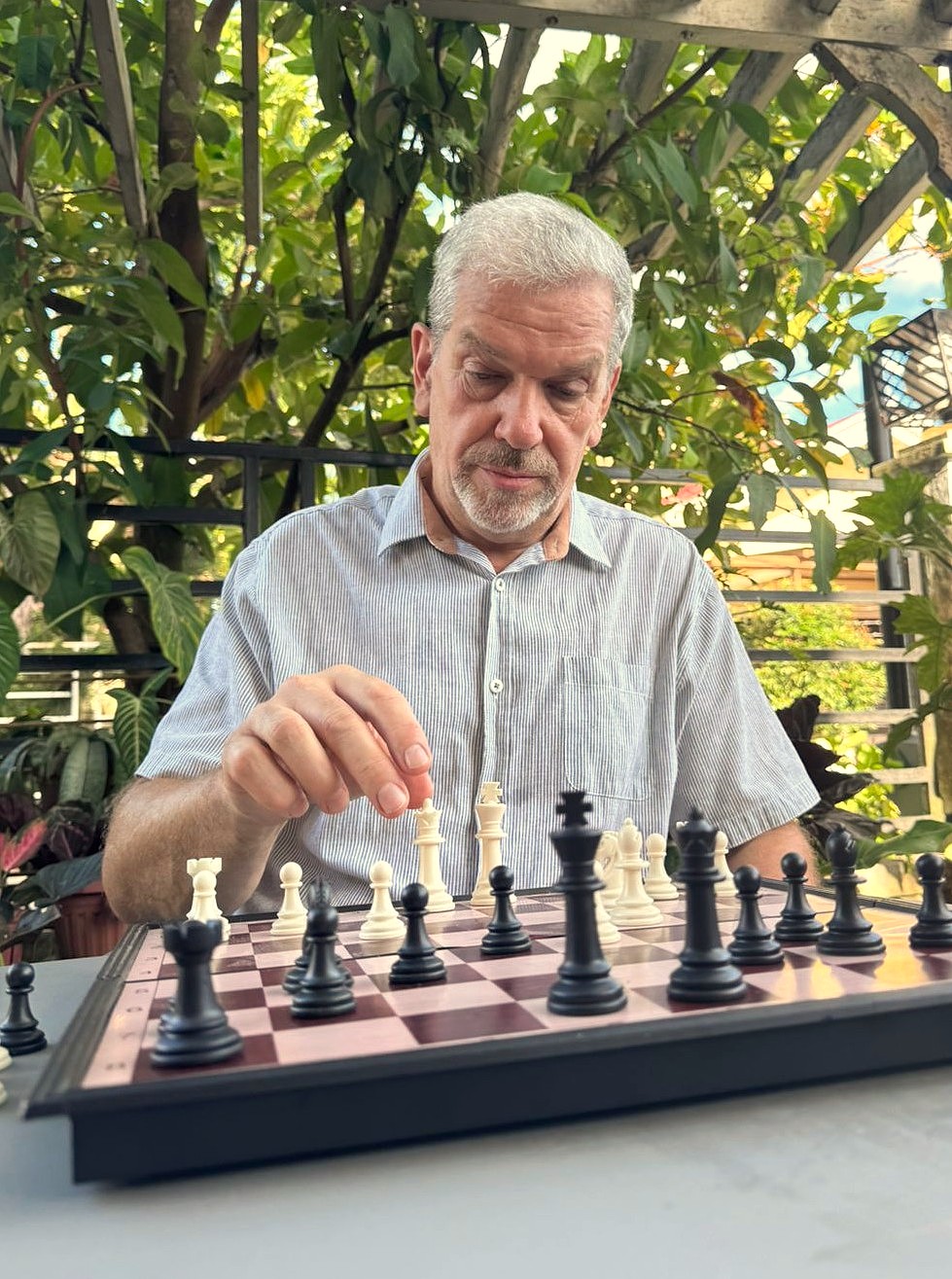
For me, chess provides a daily mental challenge. Not memorizing theory, but solving novel problems under time pressure. That's cognitive training.
But learning extends beyond games. I'm currently studying advanced mind-body techniques to add to my practice. I read research. I experiment with applications in my own life before teaching them to others.
Rest for the brain, like rest for the body, isn't about doing nothing. It's about changing activities.
Physical training is mental rest from intellectual work. Reading is mental rest from physical training. Chess is mental rest from business decisions.
Variety keeps the system engaged without creating accumulated fatigue. The result: at 63, my mental clarity feels as sharp as it did at 40. Possibly sharper, because I've accumulated pattern recognition without becoming rigid.
What I'll Teach Others: Mental Performance Systems
In a few months, I'll complete certification in advanced mental training techniques. What I'll offer:
- Sleep optimization programs—audio-guided sessions that teach effective mental relaxation and sleep induction techniques. Not meditation (which many people struggle with), but structured practices that work.
- Stress management systems—practical frameworks for identifying stress sources, solving solvable problems quickly, and neutralizing unsolvable ones through mental techniques.
- Pain management approaches—mind-body methods for reducing suffering, accelerating recovery, and maintaining training despite normal discomfort.
- Mental transformation practices—self-suggestion and mental programming techniques for building confidence, maintaining motivation, and achieving long-term goals.
Available as audio programs, guidebooks, articles, video training, and one-on-one online sessions for people who want personalized guidance.
The goal isn't to make people into meditation masters. It's to give them practical tools that actually work in real life—for busy people over 40 who want better sleep, less stress, sharper minds, and resilient bodies.
Why Most People Ignore This (And Suffer For It)
Here's what I see constantly:
People train their bodies seriously but completely neglect their minds. They lift weights consistently but sleep poorly. They follow nutrition plans perfectly but live in chronic stress.
They optimize their training program but ignore the mental patterns sabotaging their recovery. Then they wonder why progress stalls, why they feel exhausted, why aging seems to accelerate despite their physical efforts.
The body can't outperform a stressed, sleep-deprived, mentally rigid mind.
You can have perfect training and nutrition, but if you sleep 5 hours a night and live in constant anxiety, you're undermining everything.
Conversely, excellent mental training amplifies physical results. Better sleep means better recovery. Lower stress means less inflammation. Mental resilience means consistent training over decades instead of boom-bust cycles.
The mind-body system works together. Training only one side leaves massive performance on the table.
The Practical Reality: This Is Learnable
You might think: "That's great for you, but I'm not naturally calm/focused/resilient."
Neither was I.
These are trained skills, not personality traits.
I wasn't born managing stress well. I learned systematic approaches through study and practice. I didn't naturally sleep great. I built protocols that work through experimentation and refinement.
Mental clarity isn't genetic—it's the result of keeping my brain engaged with challenging activities and managing stress that would otherwise fog cognition.
The techniques I use—self-suggestion, mental relaxation, visualization, stress processing—are all learnable. They require practice, like any skill. But they're not mystical or complicated.
Most people never learn them because:
- They don't realize mental training is trainable
- They don't see the connection to physical longevity
- They try meditation once, struggle with it, and give up
- They think mental work is "soft" compared to physical training
All of those are misconceptions.
Mental training is practical, systematic, and produces measurable results—better sleep quality, lower resting heart rate (my pulse is 52-55), improved recovery metrics, sustained cognitive performance.
And unlike physical training, which has diminishing returns as you age, mental training often becomes more effective over time as you accumulate experience and wisdom.
The Integration: Mind and Body Together
At 63, I train both sides of the system deliberately.
Physical: 5-6 days per week of structured training—moderate intensity, perfect form, smart recovery.
Mental: daily practices for stress management, sleep optimization, cognitive engagement, and mental resilience.
The physical training would fail without the mental foundation. Poor sleep would prevent recovery. Chronic stress would increase inflammation and injury risk. Mental rigidity would prevent the adaptability required for sustainable training.
The mental training would be incomplete without physical practice. A sharp mind in a weak body is vulnerable. Mental resilience is easier to maintain when your body feels capable.
Together, they create a system that stays strong, sharp, and adaptable for decades. This is what longevity actually looks like—not just a healthy body or a sharp mind, but an integrated system that functions well across all dimensions.
The Bottom Line
Most people over 40 focus exclusively on physical training and wonder why they still feel stressed, sleep poorly, and struggle with motivation.
The missing piece is mental training.
Not vague "mindfulness" or complicated meditation retreats. Practical, systematic techniques for managing stress, optimizing sleep, maintaining mental clarity, and building resilience.
I've used these approaches for decades. They work as well at 63 as they did at 40—actually better, because I've refined them through continuous practice.
In a few months, I'll start teaching them to others who want the complete system—mind and body integrated for sustainable performance.
If you're training your body seriously but ignoring your mind, you're leaving half the equation unsolved. And that half might be the more important one.
Sleep quality, stress resilience, mental clarity, and psychological strength determine whether you can actually sustain physical training for 20, 30, 40+ years.
Train both sides. Build the complete system.
That's how you stay strong and sharp for decades, not just months.