



Most people misunderstand recovery.
They think recovery means doing nothing. Lying on the couch. Taking days off from everything. Complete inactivity.
That's not recovery. That's stagnation.
At 63, I train 5-6 days per week, travel extensively, manage multiple projects, maintain an active social life, pursue various interests, and still feel energized and capable.
I'm not superhuman. I don't have unlimited energy. I get tired like everyone else.
But I've learned what recovery actually means—and it's almost the opposite of what most people think.
Here's how recovery actually works after 40, and why the conventional advice gets it wrong.
The Fundamental Principle: Rest Is Changing Activities
The English have a phrase: "the pleasure of doing absolutely nothing."
I rarely experience those days. Even when traveling, there's always something engaging to do, learn, or explore.
This isn't restlessness or inability to relax. It's understanding a fundamental truth: rest for the body isn't about doing nothing. It's about changing activities.
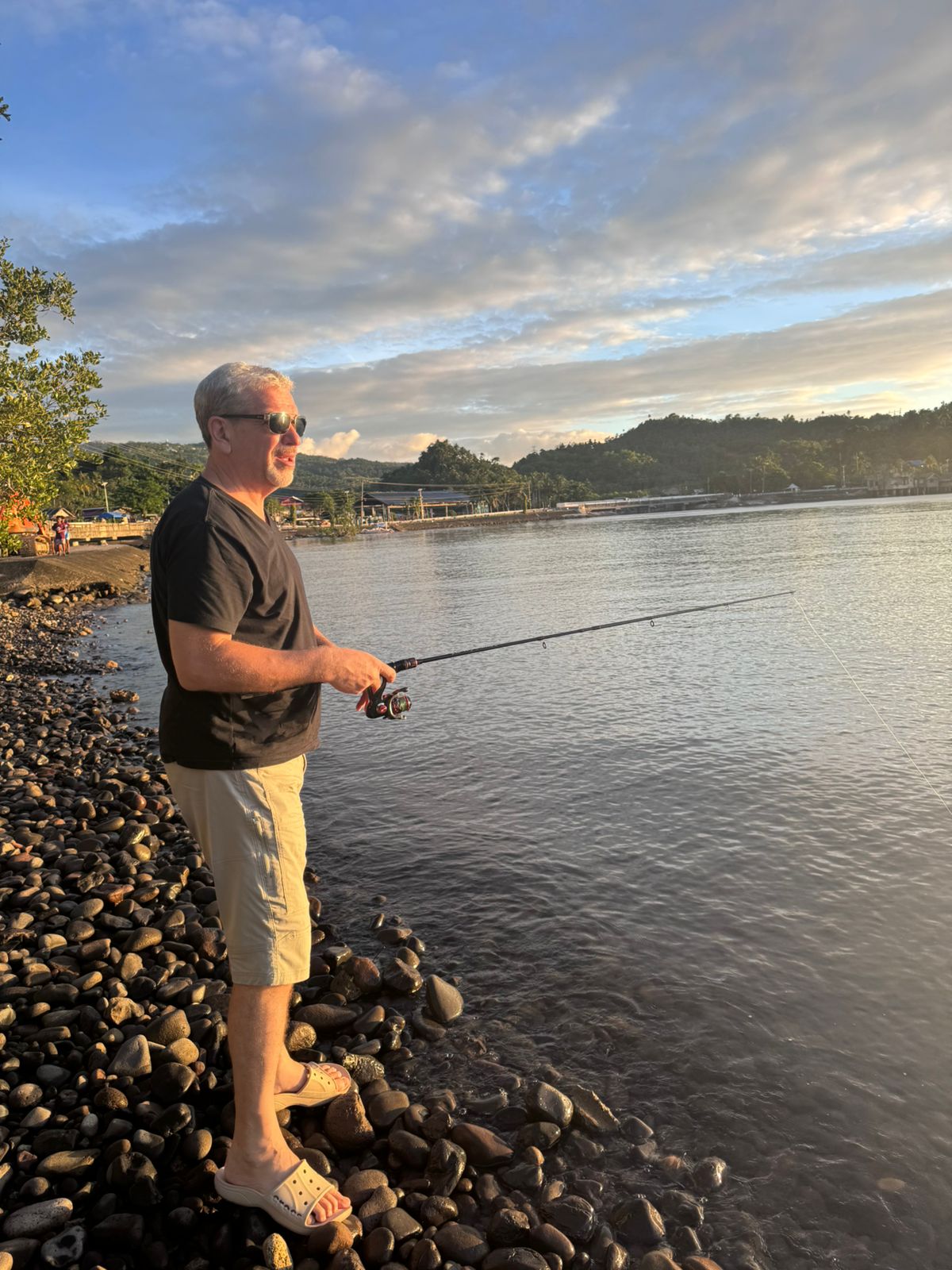
Physical training is mental rest from intellectual work. Reading is physical rest from training. Cooking is creative rest from analytical thinking. Fishing is mental rest from everything else.
The body recovers from training not by lying still, but by engaging in different activities that don't stress the same systems.
The mind recovers from intense focus not by going blank, but by shifting to different types of engagement.
This is why my "rest days" from training don't mean I'm inactive.
They mean I'm doing other things—planning projects, learning new information, pursuing interests, spending time with friends and family, going fishing, cooking elaborate meals.
These activities feel restful because they're different from training stress. But they're not passive. They're active recovery.
And that makes all the difference.
What Real Recovery Looks Like
Here's what a typical "rest day" actually involves for me:
Maybe I skip the gym. But I'm not sitting idle.
I might spend hours organizing my digital library—information files and links I've accumulated over years. The collection has grown past a thousand items, far beyond what I could remember without a system.
I used to rely on handwritten notes. That method became obsolete as the volume of information exploded. Now everything is digital, organized, accessible.
This mental work—organizing, synthesizing, connecting information—rests my body while engaging my mind.
Or I go fishing. Not for the result (though I love catching, cooking, and eating fish), but for the experience of being in nature, the meditative quality of the activity, the complete shift from my normal routine.
Or I cook—really cook, elaborate meals with full attention and creativity. I love cooking. If you cook without pleasure, the food doesn't taste good. And I love eating well.
Or I watch highlights from my favorite hockey teams (rarely full games anymore—time constraints), catch up with friends and family, work on project planning, read about topics I'm exploring.
None of this is "doing nothing." All of it is recovery—because it doesn't stress the same systems that training stresses.
The body doesn't need you to be idle. It needs you to stop doing the specific thing that created fatigue.
Sleep: The Non-Negotiable Foundation
Now, there's one type of recovery that actually requires inactivity: sleep.
I sleep 7-8 hours consistently. Not because I'm disciplined, but because that's what my body needs for full capability.
Sleep is the most critical recovery process. Nothing—not nutrition, not supplements, not recovery techniques—comes close to matching quality sleep for restoration.
Deep, complete sleep allows:
- Muscle repair and growth
- Nervous system recovery
- Hormone regulation
- Immune system function
- Memory consolidation
- Cognitive restoration
Without adequate sleep, everything else fails. You can have perfect training, ideal nutrition, and excellent stress management—but if you sleep 5 hours a night, your body breaks down.
After 40, sleep becomes even more critical because recovery takes longer. The margin for error shrinks. Young people can get away with poor sleep for a while. After 40, chronic sleep deprivation accumulates into serious problems—impaired recovery, increased injury risk, cognitive decline, metabolic issues.
I'll be covering sleep optimization extensively in this project—how to fall asleep quickly, how to improve sleep quality, and specific techniques that work.
For now, understand this: 7-8 hours of quality sleep isn't optional if you want to train seriously for decades. It's fundamental.
The Spontaneous Deload: When Life Creates Rest
I don't schedule formal "deload weeks"—planned periods of reduced training intensity. But they happen naturally.
Sometimes a session gets canceled for scheduling reasons. Sometimes travel disrupts routine. Sometimes other priorities take precedence.
Instead of forcing training to happen anyway, I let these natural breaks serve as recovery periods. This is adaptive planning, not rigid programming.
Rigid programs say: "Week 4 is deload week, reduce volume by 40%." Whether you need it or not.
Adaptive planning says: "When life creates natural breaks, use them for recovery instead of fighting to maintain volume."
The result is the same—periodic reduction in training load—but it happens organically based on real circumstances rather than arbitrary scheduling.
This requires letting go of control. You can't force every week to match a program. Sometimes life intervenes. Use it as recovery rather than stress about disruption.
After 40, flexibility in planning matters more than rigid adherence to programs.
Listening to Fatigue Signals
Occasionally, fatigue or mild unwellness appears.
When it does, I reduce intensity until recovery happens. This is usually brief—a few days, maybe a week at most.
The key is recognizing the signals early and responding immediately, rather than pushing through and turning minor fatigue into significant breakdown.
Signals to watch for:
- Elevated resting heart rate (measured first thing in the morning)
- Poor sleep quality despite normal routines
- Decreased motivation for training (not laziness—genuine lack of energy)
- Persistent muscle soreness beyond normal
- Reduced performance on exercises that normally feel manageable
- Feeling "off" without specific symptoms
Any of these means: reduce training load immediately. Take an extra rest day. Cut intensity by 30-50%. Let the body recover.
Most people ignore these signals and push through. That's fine at 25. At 60, it turns a two-day recovery need into a two-week forced break.
Listen early. Adjust immediately. Resume fully when signals normalize.
This isn't weakness—it's intelligent system management.
Nutrition: The Recovery Fuel
Nutrition is one of the most critical aspects of recovery and longevity overall.
Protein is a particularly important component. After 40, protein requirements increase because muscle protein synthesis becomes less efficient. You need more protein to maintain the same muscle mass.
I'll be covering nutrition extensively in future content—what I've learned, what I've tested on myself, what actually works versus what's theory.
For now, understand: nutrition for recovery isn't about exotic supplements or complicated timing protocols.
It's about:
- Adequate protein (roughly 1.6-2.0 grams per kilogram of body weight)
- Sufficient overall calories (chronic undereating impairs recovery)
- Nutrient density (vegetables, fruits, quality fats)
- Hydration (often overlooked, critically important)
- Consistency (occasional perfect meals matter less than daily adequate nutrition)
Recovery happens during the 22-23 hours you're not training. Nutrition fuels that process.
Training creates the stimulus. Nutrition and rest create the adaptation. Optimize both sides of the equation.
The Information Library: Mental Recovery and Growth
I mentioned my digital library—over a thousand files and links accumulated over years. This isn't hoarding. It's systematic knowledge management.
As you age, the volume of information you encounter expands. Trying to remember everything becomes impossible.
Handwritten notes worked when information came slowly and in smaller volumes. In the digital age, with constant access to research, articles, videos, and resources, you need a better system.
I organize everything: training information, nutrition research, mind-body techniques, business insights, project ideas, useful resources.
When I need something, I can find it. When I learn something valuable, I capture it.
This serves multiple purposes:
First, it's active learning. Organizing information forces you to process it, categorize it, and understand relationships between concepts.
Second, it's mental rest from physical training. Engaging intellectually while the body recovers.
Third, it prevents information loss. If I read something valuable five years ago, I can retrieve it instead of vaguely remembering "I saw something about that once..."
Fourth, it keeps the mind active and growing. Continuous learning—organizing new information, connecting concepts, building knowledge—maintains cognitive function.
Mental recovery isn't about going blank. It's about engaging differently than during your primary work.
The Pleasure Principle: Recovery Should Feel Good
I cook because I enjoy it. I fish because I love being in nature. I watch hockey highlights because it's entertaining. I organize information because I find it satisfying.
These activities serve recovery purposes, but they're not obligations. They're pleasures.
This is critical: recovery activities should be enjoyable.
If your "rest day" feels like another obligation—"I have to do yoga, I have to meditate, I have to foam roll for 45 minutes"—you're not recovering. You're adding stress.
Find activities that genuinely restore you. Things you want to do, not things you feel you should do.
For me: fishing, cooking, learning, organizing, socializing.
For you: might be completely different. Reading, gardening, playing music, woodworking, whatever engages you pleasantly without creating stress.
The best recovery activities restore both body and mind while feeling like enjoyable ways to spend time, not additional tasks to complete.
The Hidden Reserves: A Hockey Night Story
Let me tell you about a specific type of recovery that seems paradoxical.
Sometimes, after a long, exhausting workday, I come home, eat, and relax. Then I remember: hockey tonight.
Games are usually late evening—that's when everyone can play after work and family obligations are handled.
And immediately, two voices start arguing inside.
Voice One: "You have to go!"
Voice Two: "Go where? Hockey again? You're exhausted. Rest. Lie down. Watch something interesting. Hockey will be there another time."
Voice One: "No. You're going."
Voice Two responds immediately: "Look at you—you can barely lift your hockey bag. It's heavy! You're seriously going to put on all that equipment and skate hard for 90 minutes? Are you insane?"
Voice One: "Shut up. Stop whining. Let's go."
So I go.
I arrive at the locker room. Everyone's there—some I've known 10-15 years. The pre-game conversation, the jokes, the familiar ritual of putting on all the hockey armor.
Suddenly, I don't feel so tired anymore.
Then I step on the ice. Warm up. Different feeling entirely.
The game starts. Fatigue? What fatigue?
For the duration of the game, I forget not only tiredness but every other problem that exists outside the arena.
After the game: hot shower. Walking to the car, I feel reborn. So much energy, I could go back to work right now.
This experience illustrates something crucial: our bodies contain enormous reserves we don't even suspect exist.
You just have to learn they're there, understand how to access them, and use them wisely.
The lesson isn't "push through exhaustion always." It's "understand the difference between genuine depletion and temporary fatigue that dissolves with engagement."
Sometimes what feels like exhaustion is actually understimulation. Your body isn't depleted—it's bored, unchallenged, waiting for something engaging.
The right activity doesn't drain those reserves—it unlocks them.
This is why active recovery works better than passive rest. Movement, social engagement, challenge—these activate systems that pure rest leaves dormant.
Your body has more capacity than you think. But you have to give it the right stimulus to reveal it.
Social Connection: The Overlooked Recovery Tool
Time with friends and family appears in my recovery days regularly.
This isn't just pleasant—it's restorative.
Social isolation increases stress, impairs immune function, and accelerates aging. Social connection does the opposite.
After 40, maintaining relationships becomes more important for longevity, not less. Yet people often sacrifice social time for training or work, treating it as optional when everything else is done.
Wrong priority.
Social engagement is recovery. It reduces stress hormones, improves mood, provides perspective, creates meaning beyond just physical performance.
Make time for people who matter. It's not taking away from training—it's supporting the entire system that makes training sustainable.
What Doesn't Work: The Passive Recovery Myth
Here's what I don't do: spend days lying on the couch doing nothing. I don't take "complete rest weeks" where all activity stops.
I don't treat rest as pure inactivity.
Why not?
Because complete inactivity feels terrible. It doesn't restore energy—it creates lethargy. It doesn't improve recovery—it just creates stiffness and mental fog.
Your body is designed for movement and engagement. Depriving it of both, even for "recovery," works against its nature.
The myth of passive recovery—that you need to do nothing to recover—keeps people stuck in boom-bust cycles.
They train hard until exhausted, then crash into complete inactivity, then feel guilty and restart training before fully recovering.
Active recovery—changing activities, staying engaged in different ways—allows continuous adaptation without accumulated fatigue.
You can train 5-6 days per week for decades if you recover actively during the 1-2 days you're not training and the 23 hours per day you're not in the gym.
The Long View: Recovery Enables Consistency
Here's what matters most for longevity: consistency over decades.
Not how hard you train in any single week. Not how much you can handle in a month. Whether you can sustain training for 20, 30, 40+ years.
Recovery determines consistency.
If you never recover adequately, you eventually break down. Training becomes unsustainable. You quit or reduce to minimal levels.
If you recover intelligently—through activity change, adequate sleep, proper nutrition, listening to fatigue signals—you can train indefinitely.
I've trained consistently for over 40 years since my track and field days. Not because I have special genetics or unlimited willpower. Because I learned to recover effectively.
The people I see quit training in their 50s and 60s aren't weak or unmotivated. They're chronically under-recovered from years of poor recovery practices.
They trained hard. They never learned to recover smart. Eventually, their bodies gave out.
Don't let that be you.
The Bottom Line
Recovery after 40 isn't about doing nothing. It's about doing different things.
It's about sleeping 7-8 hours consistently because that's non-negotiable for restoration.
It's about changing activities rather than forcing rest days of pure inactivity.
It's about listening to fatigue signals early and adjusting immediately.
It's about proper nutrition that fuels the 23 hours per day you're not training.
It's about engaging your mind through learning, organizing, creating—not letting it go idle.
It's about social connection, enjoyable activities, pleasurable pursuits that restore energy instead of depleting it.
At 63, I train 5-6 days per week, manage multiple projects, travel extensively, and maintain energy throughout.
Not because I have endless reserves. Because I understand that recovery isn't the absence of activity—it's the presence of the right activities.
Rest makes you stronger. But only if you understand what rest actually means.
Stop trying to do nothing. Start changing what you do.
That's how you maintain energy, capability, and performance for decades. And that's how you make training sustainable for the long term—which is the only term that matters.