



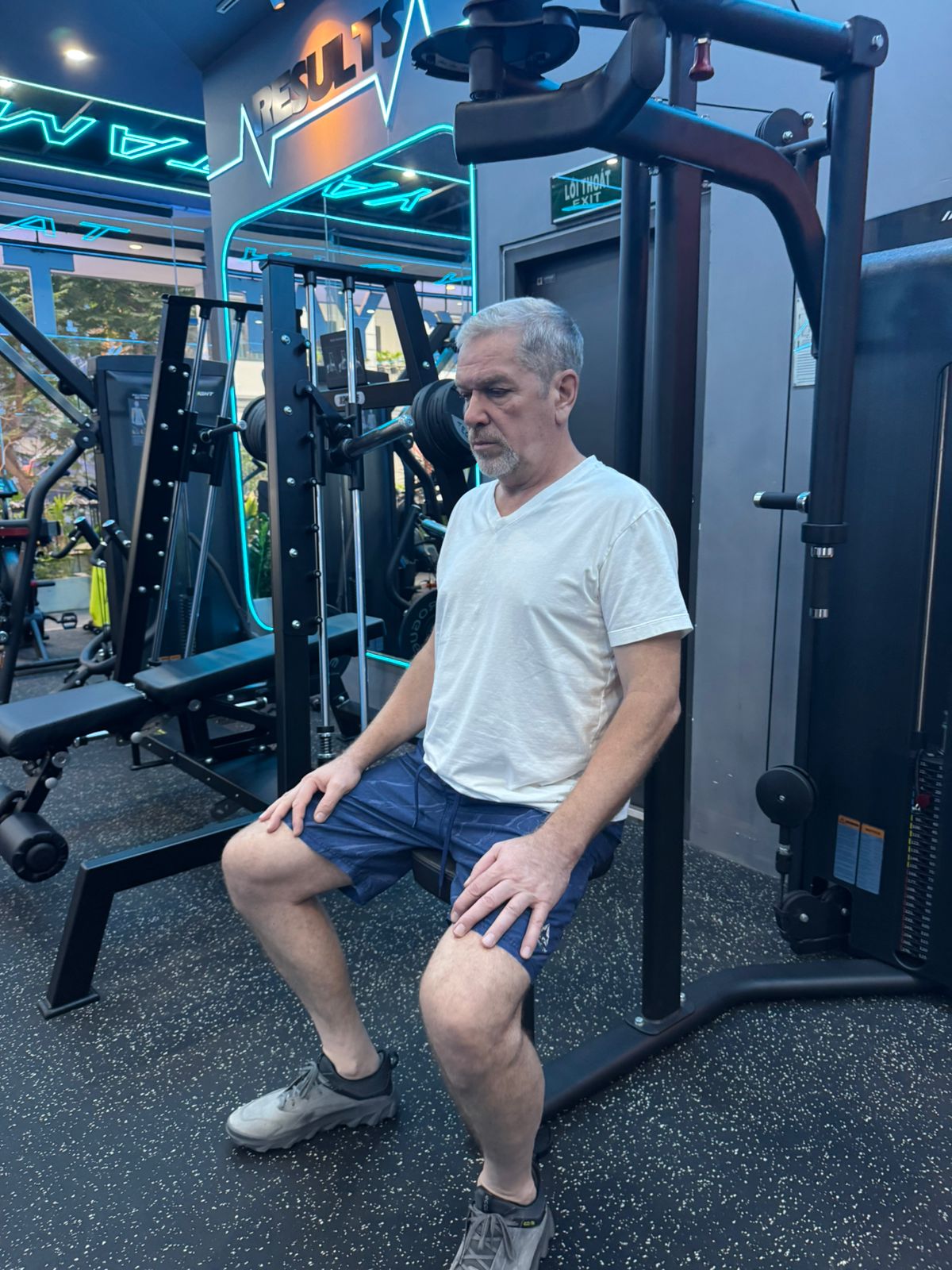
At 63, I play hockey 1-2 times a week with players decades younger. I play chess daily—not to master theory, but to solve new problems and keep my mind sharp. I travel extensively, recently completing a flight over the North Pole and circling the globe. I live medication-free (aside from basic vitamins and minerals), don't need reading glasses, and maintain the energy most people abandon by 50.
When people ask "How is that possible?", they expect answers about genetics, supplements, or some secret protocol. The real answer is simpler and more surprising: I treat my body like an engineering project.
This isn't a metaphor. I'm a trained engineer with a background in composite materials and construction. I've spent decades applying systems thinking to complex problems—from material science to building projects. About 20 years ago, I started applying the same approach to my own longevity.
And it works.
The Problem: Medicine Isn't Enough
I have deep respect for modern medicine. The advances are remarkable—lifesaving surgeries, emergency interventions, diagnostic technology that seemed impossible 50 years ago. But I also noticed something troubling.
I watched an oncologist die from cancer. I saw five different doctors look at the same test results and give five different diagnoses—all of them wrong. I experienced the disconnect between what medical science knows and what actually helps people stay healthy long-term.
Modern medicine excels at crisis management. It's brilliant at fixing what's broken. But it's not designed to keep systems running optimally for decades. That's not a criticism—it's just not what the system was built for.
So I started studying the inconsistencies. I read research. I experimented on myself. I approached health the way I approached engineering problems: identify constraints, test variables, measure results, iterate. What I discovered changed everything.
The Engineering Approach: Systems Over Reactions
Most people treat health reactively.
- Something hurts → take a pill.
- Energy drops → drink coffee.
- Can't sleep → try melatonin.
- Joints ache → stop training.
This isn't a system. It's crisis management. Engineers don't design bridges to collapse and then fix them. We design them not to collapse in the first place. We build in redundancy. We account for stress over time. We plan for decades of use, not just today.
I apply the same thinking to my body.
Instead of asking "How do I fix this problem?", I ask:
- What conditions prevent this problem from occurring?
- What margins of safety do I need?
- What early indicators show stress in the system?
- How do I build resilience for 20-30 years, not just 6 months?
This shift—from reactive to proactive, from fixing to designing—changed everything.
What This Looks Like in Practice
Let me give you a concrete example: training adaptation.
Most people follow generic workout programs. "Do 3 sets of 10 reps." "Train 5 days a week." They push through pain, ignore fatigue signals, and wonder why progress stalls or injuries appear.
I don't follow programs blindly. I adapt them.
I listen to my body's feedback—not in a vague, mystical way, but as data points. How did I recover from the last session? What's my resting heart rate telling me? How are my joints responding? What's my stress level this week?
Then I adjust.
Some weeks, I train harder because all systems show green. Other weeks, I scale back because the data suggests stress accumulation. I modify exercises based on how my shoulders or knees are responding. I time my deload weeks not by a calendar, but by recovery metrics.
This isn't guesswork. It's engineering: measure, analyze, adjust.
The result? I've played hockey consistently for over 20 years (since returning to the sport after 40) with minimal injuries. My joints are healthy. My performance hasn't declined—in many ways, it's improved because I've optimized the system.
Chess: Training the Mind Like the Body
Daily, I play 2-5 chess games on Chess.com. My rating sits around 1100-1200—not grandmaster level, and I don't aim for it.
Here's why: climbing higher requires memorizing theory. Opening repertoires, endgame positions, studied variations. That's pattern recognition, not problem-solving.
I'm not interested in recalling theory. I want to solve new problems.
Every game presents unique positions that theory doesn't cover. The middle game, tactical complications, time pressure decisions—these force my brain to work. To calculate. To adapt.
This is the mental equivalent of functional training. Not isolation exercises (memorizing openings), but compound movements (solving novel positions under constraints).
The brain, like muscle, needs appropriate stress to stay sharp. But it also needs variety, challenge, and recovery. Playing daily keeps the system engaged. Avoiding pure theory memorization keeps it flexible.
At 63, my mind feels as sharp as it did at 40—maybe sharper, because I've accumulated pattern recognition across thousands of games without letting theory make me rigid.
The Results: More Than Just Hockey
The hockey gets attention because it's visible. "You're 63 and still playing?" Yes. But the real results go deeper.
I recently circled the globe. Last year, I flew over the North Pole. In the past five years, I've visited 10 new countries. I handle 17-hour flights without issue—no jet lag protocols needed, just a body that's resilient to stress.
My hair has changed color, but it's still there. I don't take daily medications (beyond minerals like magnesium and zinc, B vitamins, vitamin D, and fish oil—supplements, not prescriptions). I don't need reading glasses.
I have energy for ambitious projects. This website is one of them. I have plans that extend years into the future, and I expect to be around—and capable—to execute them.
I feel alive in my relationships. I maintain an active social life. I don't feel my age, not because I'm in denial, but because the systems I've built allow me to function without the typical decline.
People my age talk about "managing decline." I don't accept that framing.
I'm not managing decline. I'm engineering sustained performance.
Why This Matters For You
You might be thinking: "That's great for you, but I'm not an engineer."
Here's the truth: you don't need an engineering degree to think like an engineer. You need to shift from reactive to proactive. You need to treat your body as a system, not a collection of problems. You need to measure, adjust, and iterate instead of following rigid protocols.
Our bodies are complex, largely unstudied systems capable of remarkable adaptation—as long as we're alive. Learning to understand what your body and mind need is never too late. You just have to do it correctly.
And yes, earlier is better. But "today" is earlier than tomorrow.
I started seriously applying this approach after 40. That's when I returned to hockey. That's when I began systematic training instead of random exercise. That's when I stopped accepting medical advice uncritically and started investigating what actually works.
If you're 45, 55, 65, or 75—you're not too late. The system can still adapt. The body can still build resilience. The mind can still sharpen.
You just need to approach it systematically.
The Uncomfortable Question
When someone asked me "How does this happen? How are you still like this at 63?", I initially thought my life wasn't interesting enough to share. But that question stuck with me.
How does it happen that most people accept decline as inevitable while others—myself included—continue building capacity?
It's not genetics. My parents didn't give me superhuman DNA. It's not luck. I've had injuries, setbacks, and challenges like everyone else. It's not some secret supplement or exotic protocol.
It's systems.
Systems for training that protect joints while building strength. Systems for recovery that actually work, not generic "take a rest day" advice. Systems for sleep, stress management, nutrition, and mental performance.
Most importantly: systems for listening to feedback and adapting, instead of following rigid rules that don't account for individual variation or changing conditions.
This is what I want to share through this project. Not just what I do (the tactics), but how I think about it (the strategy). Not just protocols, but frameworks you can adapt to your own life, body, and goals.
What's Next
Over the coming weeks and months, I'll break down specific systems:
- How I structure training to build strength without destroying joints
- Recovery protocols that actually accelerate adaptation
- The mental techniques I use for stress, sleep, and cognitive performance
- Nutrition frameworks that work in real life, not just in theory
- How to adapt when traveling, when stressed, when life disrupts your routine
Each piece will be practical, tested, and designed for people who want to stay strong, sharp, and capable for decades—not just look good for a few months.
This isn't about peak performance for a season. It's about sustained performance for 20, 30, 40+ years.
If you're 40-70 years old and refuse to accept decline as inevitable, this project is for you. If you're tired of generic advice that doesn't account for aging bodies or individual differences, this project is for you. If you want systems you can understand, measure, and adapt—not rigid protocols you're supposed to follow blindly—this project is for you.
The Bottom Line
At 63, I'm not slowing down. I'm not "managing decline." I'm not accepting limitations that society says should exist.
I'm playing hockey. Traveling the world. Building projects. Staying mentally sharp. Living without medication. Planning decades ahead.
Not because I'm special. Because I treat my body like an engineering problem—and engineering problems have solutions.
Your body is capable of more than you think. Your mind is more adaptable than you've been told. The decline you fear isn't inevitable—much of it is optional.
You just need the right systems.
And that's exactly what I'm here to share.
Welcome to Longevity Engineering.
Ready to Start?
Want to start applying these systems yourself?
Download my free Starter Kit—it includes the frameworks I use for training, recovery, and daily longevity practices. No theory, just what works.
Or explore more articles on specific systems:
Questions? Reach out to me directly at: hello@longevityeng.com
About the Author
Dany is an engineer-researcher with a background in composite materials and construction. At 63, he competes in hockey, plays daily chess, and travels extensively while living medication-free. He applies systems thinking to longevity, sharing frameworks for physical training, recovery, and mental performance designed for people 40-70 who refuse to accept decline.